Scientists at Dublin City University (DCU, Ireland), in collaboration with research teams in Chimie ParisTech – PSL (France), Chalmers University of Technology, Sahlgrenska University Hospital, Gothenburg (Sweden), and SSPC at University of Limerick (UL, Ireland), have developed a new chemical strategy for designing metal-based compounds capable of damaging cancer cell DNA, offering a potential new direction for future anticancer drug development.
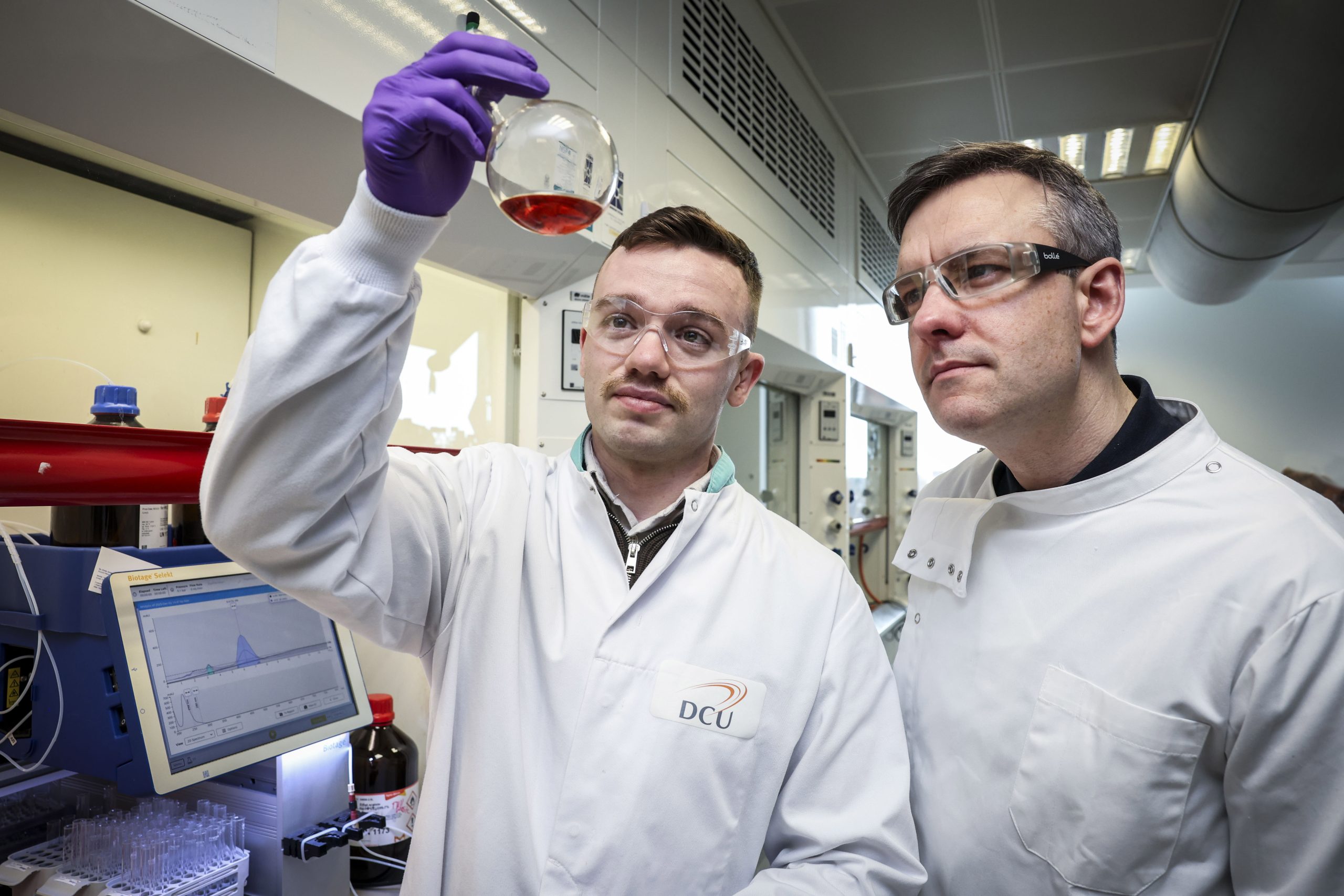
Pictured: DCU researcher and lead author on the study Alex Gibney (left) who developed the compound with Professor Andrew Kellett, Professor of Inorganic and Medicinal Chemistry (right).
Led by Professor Andrew Kellett, this European consortium has created a series of molecules that cut DNA through a distinct chemical mechanism compared with existing chemotherapy drugs. The research focuses on early-stage compounds that could form the basis of future therapies, particularly in cancers that become resistant to treatment.
The scientists used click chemistry – a fast and reliable method for assembling molecular components – to create a family of compounds known as Tri-Click ligands. When combined with copper ions, these ligands form artificial metallo-nucleases, metal-containing agents designed to cleave DNA.
Drug resistance remains one of the biggest challenges in cancer treatment. Tumours can adapt by repairing specific forms of DNA damage or by blocking the activity of conventional drugs. A key advantage of this new chemical strategy is that the compounds damage DNA via pathways that differ from those targeted by many current cancer treatments. This means they may avoid some of the typical mechanisms that cancers use to become resistant.
Professor Andrew Kellett, Professor of Inorganic and Medicinal Chemistry at DCU, said:
“Click chemistry has transformed how we build complex molecules, but its potential as a platform to assemble DNA-damaging chemotherapeutics is under-explored. One of the major challenges in cancer treatment is drug resistance. By developing compounds that damage DNA in a different way, we aim to open up new possibilities for overcoming some of the limitations of existing therapies. While this research is still at an early stage, it provides a valuable platform for future drug development.”
Professor Gilles Gasser, Professor of Bioinorganic Chemistry at Chimie ParisTech, said:
“This work is clear evidence of the potential of metal-based compounds for anticancer research, going beyond the currently heavily used platinum-based drugs. While still in its infancy, this study is a first step towards new solutions for cancer treatment. On a completely different note, this work is another demonstration of the power of collaboration between European scientists and institutions.”
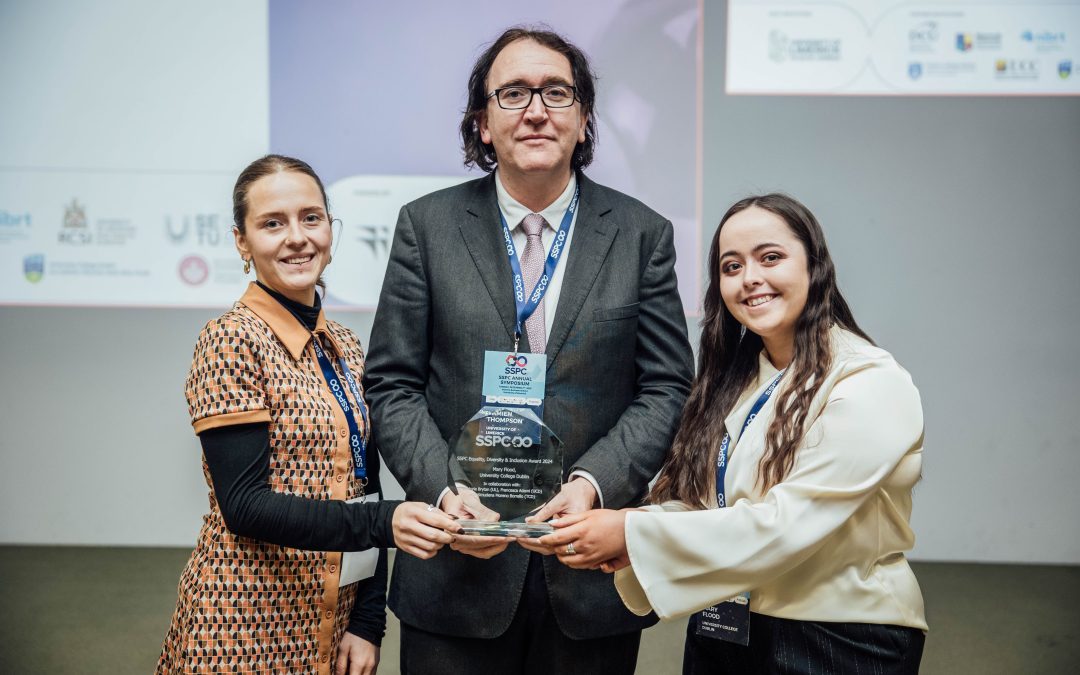
Professor Damien Thompson, Director of SSPC, Research Ireland Centre for Pharmaceuticals & Professor of Molecular Modelling at UL, said:
“This work exemplifies the value of systematic, deep screening of molecular properties in the development of more effective medicines. Support from SSPC, Research Ireland Centre for Pharmaceuticals enabled strong collaboration between our experimental and modelling teams and this new design strategy marks a key milestone in developing sustainable, well-tolerated anticancer drugs.”
Professor Fredrik Westerlund, Professor of Molecular Bioscience at Chalmers University of Technology, said:
“This study truly highlights how combined expertise across Europe can lead to innovative results in a research field of paramount importance. Novel treatments to resistant cancer tumours are highly desired in the clinics and the metal compounds developed in this study have many of the properties that are eagerly sought for.”
The findings are published in the journal Nature Communications: https://www.nature.com/articles/s41467-026-68911-5
The researchers emphasise that the findings are preclinical and further testing is required before any potential clinical application.