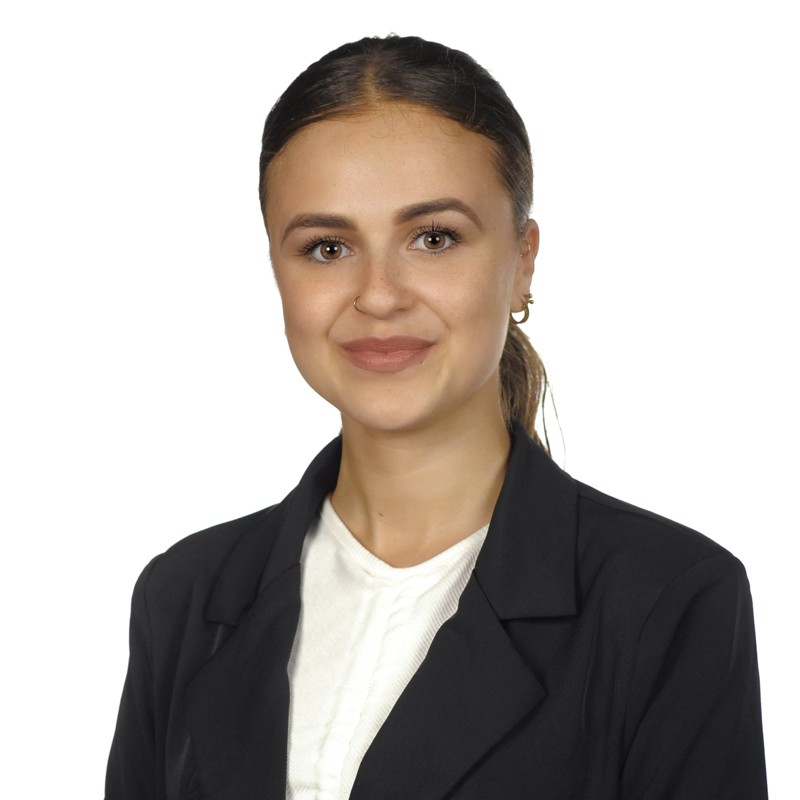


After finishing her PhD at Trinity College Dublin with SSPC, Laura Ramirez Lazaro, stayed in research and focused on broadening her scientific skill set beyond my original thesis topic. She moved into a postdoctoral position at Harvard, where she’s been exploring the origins of life, with a particular focus on chemical degradation pathways…… It’s been an exciting shift into a new research space and a chance to keep growing as a scientist.
Read Laura’s fascinating insights below:
Can you tell us about your career path since leaving SSPC?
After finishing my PhD in Dublin, I stayed in research and focused on expanding my skill set beyond my thesis topic. I moved into a postdoctoral researcher position where I’ve been working on the origins of life, with a lot more emphasis on chemical degradation.
What has been your role(s) over the past year, and how has your career evolved?
In the past 6 months I’ve been working with protocells, focusing on Darwinian evolution. What’s changed most is that I’m now responsible not just for doing the work, but for shaping the entire research approach, defining the problem, choosing the methods, and ultimately trying to answer a very important question such as – what are our origins?
How did your research experience at SSPC prepare you for your current role?
I got used to working in collaborative environments. SSPC gave me a strong foundation in science communication, and a habit of documenting and communicating results clearly through reports, posters and talks.
What has been the most rewarding part of your career so far?
It has been seeing my work translate into real impact — either the production of new bioimaging materials or now seeking answers regarding the origin of life. Being at Harvard means I get to meet and collaborate with researchers connected to NASA and space missions — the kind of people who think not only about what chemistry can do in a flask, but what chemistry can do on Mars, Europa, Venus or early Earth and being surrounded by people trying to figure out where else in the universe that chemistry might happen is a pretty good deal for a day job.
Have you worked on any particularly exciting projects you can share?
An exciting thread in my work right now is origins-of-life research. At Harvard we’re trying to understand how non-living chemistry can organize itself into systems that start to look “life-like” — things like compartmentalization, primitive metabolism, and simple forms of selection, all under realistic early-Earth (and potentially early-planet) conditions. What makes it especially exciting is how interdisciplinary it is: you’re constantly bouncing between chemistry, materials, geoscience, and bits of planetary science. One week you’re thinking about reaction networks kinetics; the next you’re asking what minerals, radiation environments, or aqueous conditions would actually exist on a given world.
What skills have proven most valuable in your role that you developed during your time with SSPC?
As a said before, communication (writing, presenting, and defending decisions). SSPC regular meetings played a major role in that part of my development, and I am really thankful for that because here are Harvard there are constant paper discussions, seminar Q&As, and plenty of informal debates (sometimes over dinner) that really need confidence, well-structured thinking.
Are there any skills you had to acquire quickly once you started your position?
I had to learn about geochemistry, and earth and planetary sciences. What is the biggest lesson you’ve learned in your first year in the workplace?
I’d say: adaptability and good judgment under uncertainty. The tools change fast — the ability to learn, ask good questions, and make defensible decisions is what stays valuable.
What do you believe are the most important traits for success in your field today?
Be resilient.
In what ways did your time at SSPC influence your career direction or opportunities?
It put me in an environment where high-quality research was normal, and it connected me to people working across academia in the country.
What advice would you give current PhD students or PDRAs preparing for the next step in their careers?
Treat your PhD like training to become a professional problem-solver. Keep a record of the good results but also the bad (even small ones), learn to explain your work to the public, and don’t give up. You’ve done more than you think and it will all come together at the end.
What would you tell someone just starting out in your field?
Be shamelessly curious. Ask ‘why’ and ‘how do we know’ constantly. And find people who are both smart and kind — your future sanity depends on it.
If you could offer one piece of advice to your past self, what would it be?
Bad days are needed to have good ones. Most of the time experiments won’t be successful but that is science, you need to learn to be ok with that, don’t give up. Also, document your work as you go, future-you will thank you, and present-you will suffer less.