
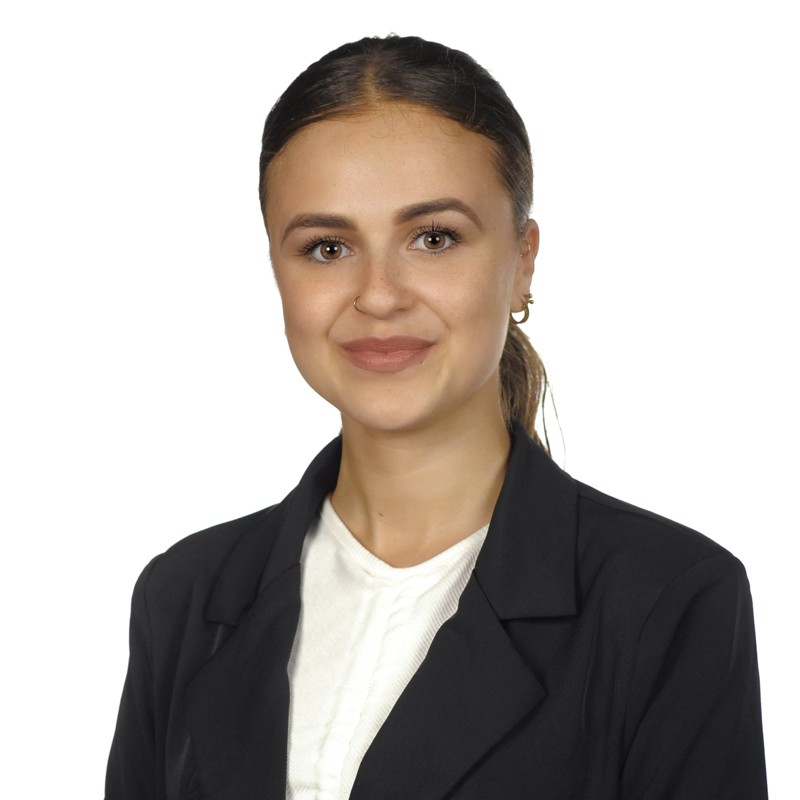
It’s inspiring to see the global paths forged by SSPC alumni, and Dr Lena Kadri is one of the many standout example. After completing her PhD research at Trinity College Dublin with SSPC, she has built an international career spanning research, innovation, and scientific leadership.
Her journey reflects the strength of SSPC’s global alumni network, scientists who bring Irish research excellence to the world, shaping industry, academia, and innovation communities across continents.
After completing my PhD at Trinity College Dublin, I moved to New Zealand to build a venture focused on translating solid-state pharmaceutical science into real-world impact. Starting that journey in a new country while building something from the ground up came with real uncertainty. There were times when nothing felt clear, but learning to trust myself and keep moving forward is what shaped me most.
Everything starts to move once you trust yourself enough to keep going….
Since then, the venture has grown through partnerships, early investment, industry and customer discovery, and backing myself to pursue a path I strongly believe in.
What has been your role over the past year, and how has your career evolved?
Over the past year, my role as a founder has evolved far beyond technical work. While science remains central, I now spend just as much time on strategy, partnerships, and aligning my team in a clear direction.
That shift forced me to step into a broader role much faster than expected. It taught me that impact doesn’t come from expertise alone — it comes from connecting real problems to real needs and building systems that deliver solutions at scale.
I truly believe that real impact starts when you decide to give something back.
What were the biggest transitions or learning curves in moving from academia to building a startup?
The biggest shift was learning how to translate complex science into language that resonates outside scientific settings. Early on, I realised that if people don’t clearly understand the problem, nothing else moves.
That meant learning to communicate differently and recognising that clarity is more powerful than complexity. Over time, I saw how much momentum comes from alignment — and how much leadership is about making complex ideas understandable to everyone.
If people don’t understand the problem, they can’t be part of the solution.
How did your research experience at SSPC prepare you for your current role?
SSPC prepared me extremely well, especially in how to approach difficult problems and stay rigorous under pressure. That training gave me the confidence to step into uncertainty knowing I would find a way forward.
Looking back, I see how much that foundation shaped my ability to move under pressure and build something independently.
Good training doesn’t just teach you how to find answers — it teaches you how to move forward without them.
What has been the most rewarding part of your career so far?
The most rewarding part has been starting with a vision I felt deeply connected to and watching it take shape in the real world — while bringing people along with me in a way I never expected.
There’s something really special about seeing people from completely different backgrounds come together around the same problem and start talking about solving it as one team. Watching that shared belief grow, and seeing how much people genuinely care, has been one of the most meaningful parts of the journey.
That’s when you realise the vision is no longer just yours
What skills have proven most valuable from your time at SSPC?
If you had asked me during my PhD, I probably would have said critical thinking and complex problem solving. Now, I would say persistence and creativity.
I’ve learned that progress requires grit, determination, and the ability to keep going even when things don’t unfold as expected. What I value most now is the freedom to think differently, approach problems creatively, and see that translate into outcomes that genuinely benefit people.
Creativity is a gift, especially when it leads to real-world impact.
Are there any skills you had to develop quickly?
Yes, definitely! Decision-making under uncertainty has been the biggest one. In a startup environment, there’s rarely a perfect moment or complete information.
Learning to trust my judgment and move anyway has probably been one of the most important lessons so far.
It taught me that momentum comes from action, not certainty.
What advice would you give current PhD students or researchers preparing for the next step?
Be open to paths that don’t look linear and focus on developing skills beyond technical expertise. Communication and collaboration matter just as much, along with understanding how and where your work fits into the bigger picture.
I’ve learned that the next step isn’t always about moving forward — sometimes it means stepping sideways or even stepping backwards. As long as you stay intentional about where you’re stepping, the rest will fall into place.
There’s no such thing as the wrong path if it’s your path.
If you could give one piece of advice to your past self, what would it be?
No one is coming to hand you the golden ticket. You have to believe in yourself — and trust that the right people will support you along the way.
I don’t mean hand-holding. I mean, being brave enough to jump first, knowing you won’t land alone.
I now understand that you don’t need permission to start.